The strength training myth that keeps older adults injury-prone.
Progress isn’t only what happens in the clinic. It’s the stairs, the shopping, and the walk you want to enjoy again.
Strength & Recovery
6 min read

Alex Morgan
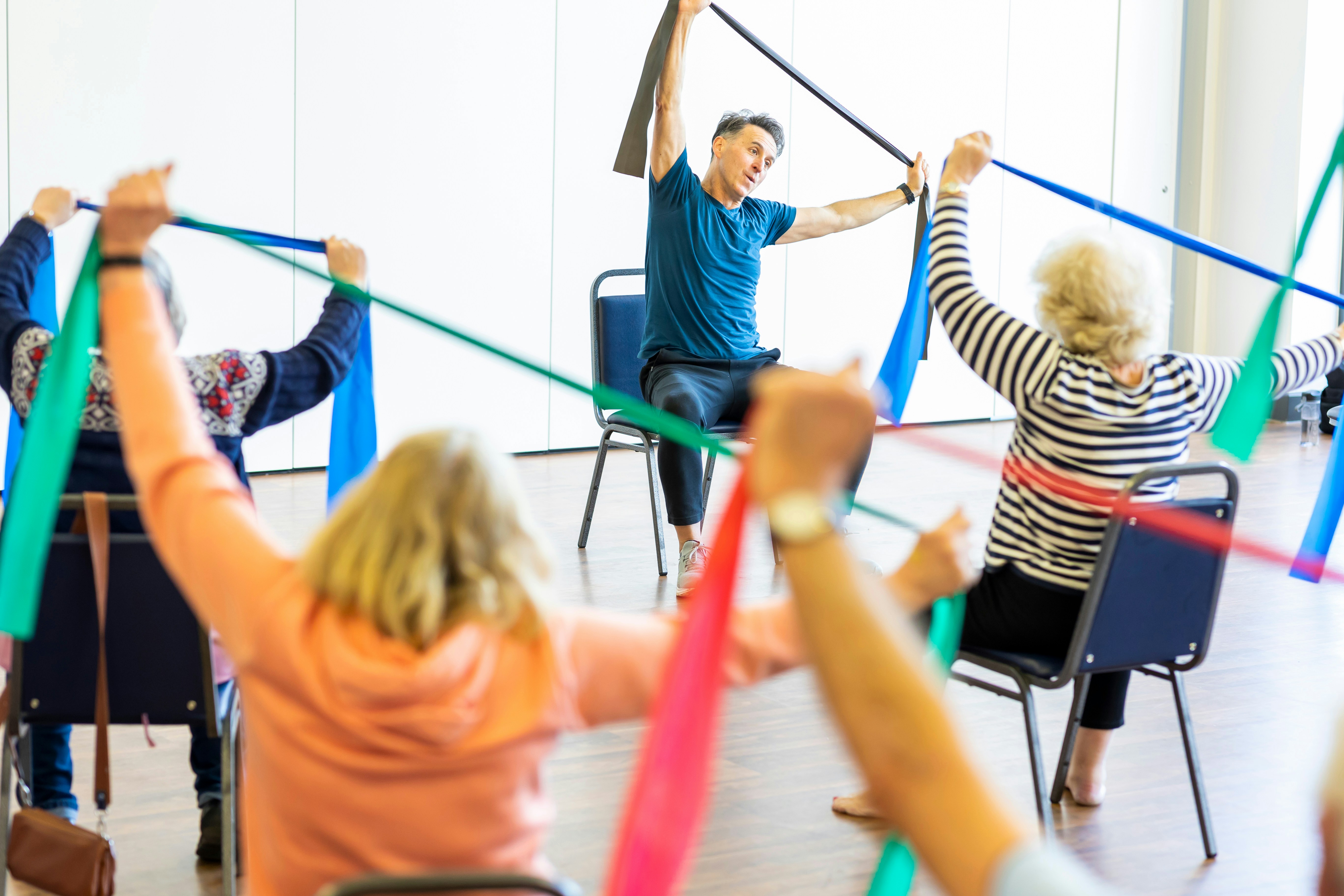
Strength, not caution, is what protects independence long-term.
There's a common assumption that as we get older, the safest approach to exercise is to scale back — gentler movements, lighter loads, less strain on the joints. It's a well-meaning instinct. It's also one of the more persistent myths in healthy aging, and one that research on sarcopenia and functional decline has been steadily pushing back against for years.
What actually happens to muscle as we age.
Starting in our 30s, adults typically lose 3–8% of muscle mass per decade if strength isn't actively maintained — a process called sarcopenia. That rate accelerates after 60. The muscle lost isn't just about appearance or general fitness; it's directly tied to the strength needed for everyday tasks — standing from a chair, climbing stairs, catching yourself if you trip.
Avoiding strength training doesn't slow this process. It accelerates it. The muscles and bones respond to load — when that load disappears, so does the body's reason to maintain them.
Why "gentle" isn't the same as "safe."
Low-impact activities like walking or swimming offer real cardiovascular benefits, but they don't provide enough resistance to meaningfully maintain muscle strength on their own. Strength training — using resistance appropriate to your current ability, whether that's bodyweight, bands, or weights — is what specifically signals the body to preserve muscle and bone density.
Falls are a useful example of where this matters most. Fall risk isn't primarily about balance training alone; leg strength is one of the strongest predictors of fall risk in older adults. Someone who can't rise from a chair without using their arms is at meaningfully higher risk of a fall than someone who can — and that's a trainable capacity, not a fixed trait of aging.
What appropriately dosed strength training looks like.
This isn't about lifting heavy or training like an athlete. It's about consistent, appropriately loaded resistance work:
Start with what your body can currently manage — often bodyweight or light resistance, built up gradually.
Focus on functional movement patterns — sitting to standing, pushing, pulling, carrying — since these map directly onto daily tasks.
Progress the load over time, not just the number of sessions. Doing the same light routine indefinitely stops providing a stimulus to maintain strength once the body adapts.
Prioritize consistency over intensity. Two to three sessions a week, sustained over months, outperforms occasional harder efforts.
The real risk isn't the training.
The instinct to protect an aging body by asking less of it is understandable, but the evidence points the other way: undertraining, not overtraining, is usually the bigger risk to long-term independence. A well-assessed, appropriately progressed strength program is one of the more effective tools available for staying capable — not despite age, but because of it.
Want this for your own site?
Remix this template